


Reflections on the Fancy Color Market
Date: 22 May, 2025 | By Erez Jacob Rivlin.
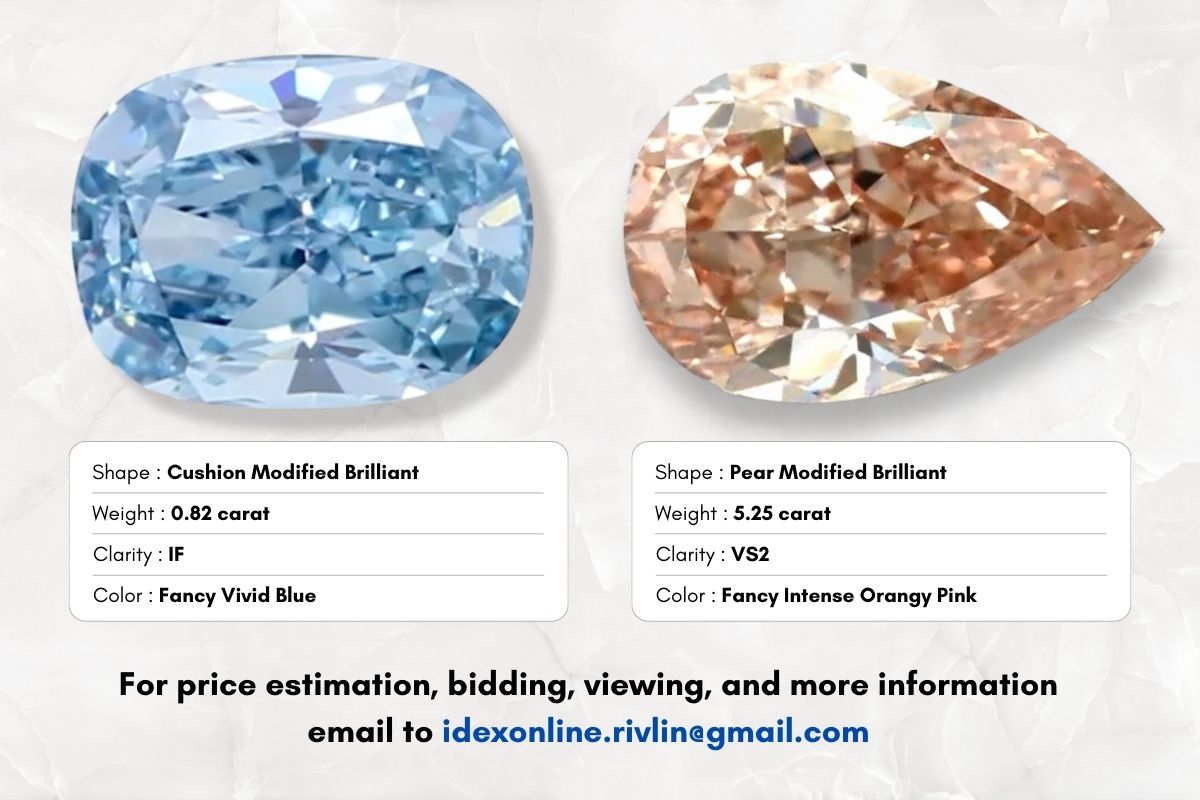
The entire diamond market is facing extremely tough conditions – but the fancy color niche seems to have a life of its own.
Just last week the 10-carat ‘The Mediterranean Blue’ diamond sold for $21m at Sotheby’s, and other fancy color experts report healthy and stable demand.
I spoke with Eden Rachminov, managing owner of Rachminov Diamonds 1891, one of the world’s leading manufacturers of fancy color diamonds. He says investors are increasingly turning to fancy colors because fewer and fewer diamonds being mined today
“I’m overwhelmed by the number of mining companies preparing to shut down operations, simply because the supply of diamonds coming out of the earth is rapidly depleting,” he said.
“This scarcity is clearly reflected in the market. We are approaching a point where acquiring a fancy color diamond will no longer be about choice, but about having access.
“Buyers will feel the urgency to secure whatever becomes available. These diamonds continue to stand out as the ultimate way to preserve and protect wealth. They have always been a remarkable investment, and as time goes on, this asset class only proves its stability and long-term value.”
We can see some interesting trends in the pink diamond family segment (pink, purple, red, and their different combinations and over-tones). The offer on the global market has been drastically reduced in the past years because of the war in Ukraine and diamond mines approaching the end of their lives.
The largest pink diamond contributor to the world market was the Argyle mine, that has ended its life-of-mine in November 2020. Sanctions on Russian diamonds have cut the supply of the second world source of pinks (mainly purple diamonds), originating from the mines of the Sakha Republic of the Russian Federation.
The GIA conducted a survey on the pink diamond family in which researchers analyzed about 90,000 certified fancy color diamonds. A quarter of the stones had the rare phenomena that is defined by gemologists as Type IIa – a diamonds with no nitrogen or close to no nitrogen. These are rare diamonds that nature has created with a higher degree of purity of the crystalized carbon.
Nitrogen, on the other hand, is the cause for the extremely rare pink color found at the Golconda diamond mine, in India.
99.5% of the pink diamond family, including brown over-tones (other than the Golconda diamonds), are caused by what is called ‘plastic deformation’. The huge pressure that exists under hundreds of kilometers below the surface, causes those graining lines (that also exist in white diamonds), to generate different shades of pink.
But then the link between type 2a (no nitrogen) and nice and distinct pink colors is revealed. The large amount of In the intense, vivid, and deep colors, there are high amounts of nitrogen, just like the Golcondas.